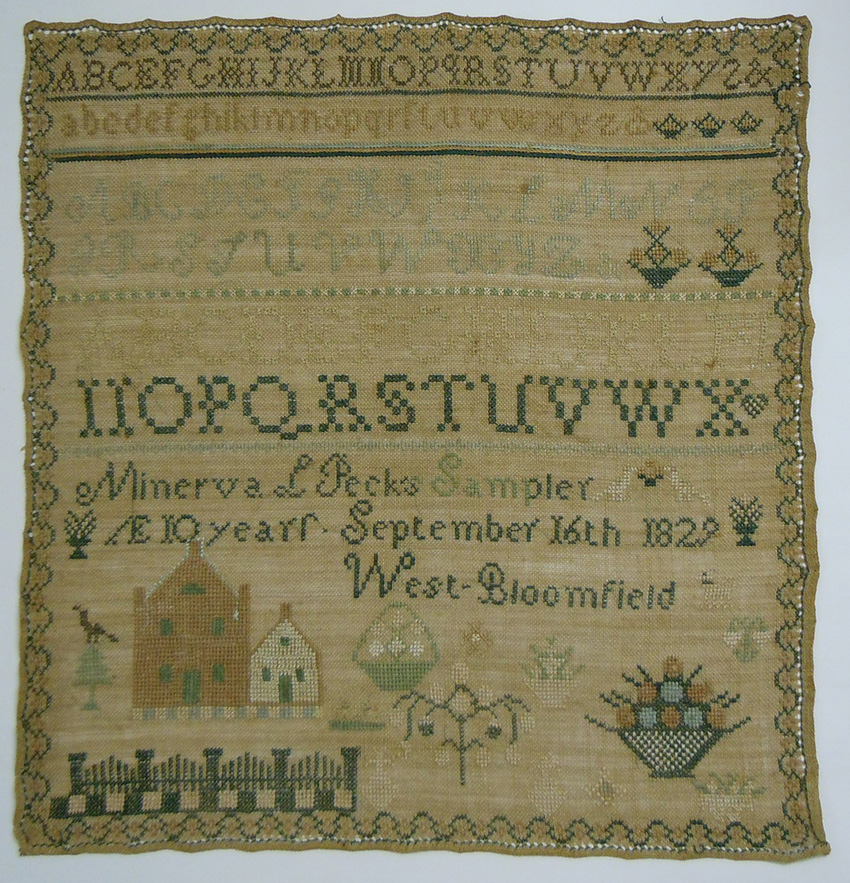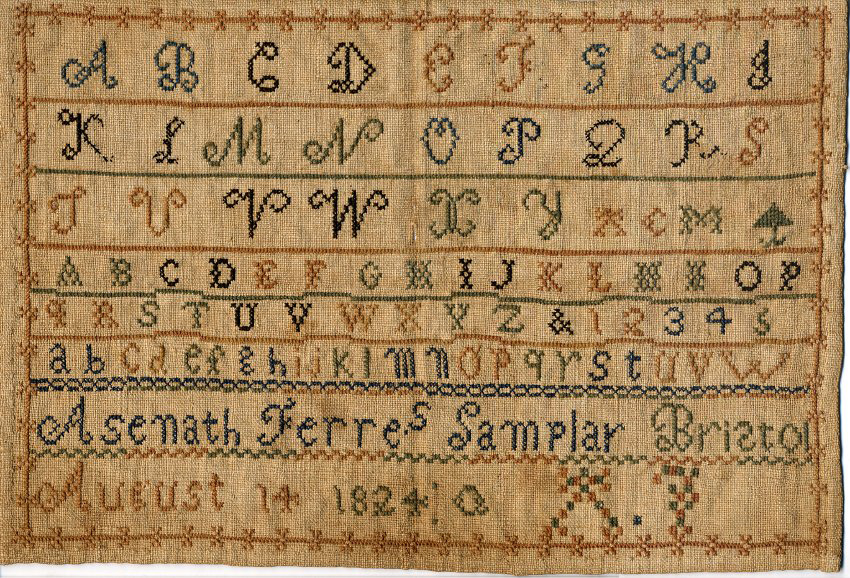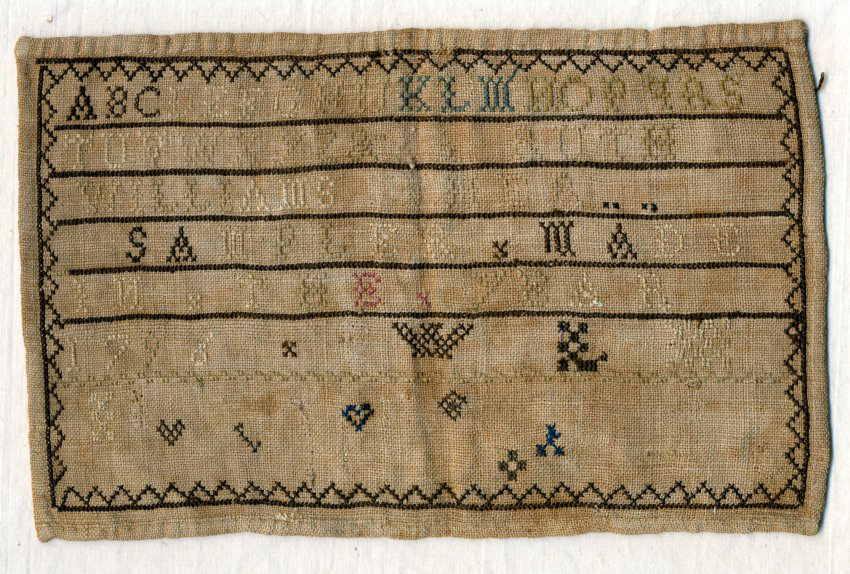
The most common makers of needlework samplers were young girls and women during the 18th and 19th centuries. Great effort has been made to conduct research beyond simply the name and birth date of the makers of the samplers. Who were the makers of these samplers? What kinds of family were they from – their socio-economic status, cultural origins? Where did the maker live when the sampler was made? Did the maker learn her (and sometimes his) skill at home or in a school? Why did the maker create the sampler?
Each sampler in this study has been evaluated as to how it was made. What types of fabrics were used? What was the thread count and thread thickness of the fabric? How do these fabrics differ from today’s needlework fabric? What types of floss materials were used – silk, wool, cotton? What variety of stitches and motifs were used on these samplers? What colors were most common?
This exhibit includes seventy samplers from several areas and time periods. Many of the samplers were borrowed from other historical societies and private individuals. Selected samplers from the OCHS collection have been charted and reproduced to compare with the originals. To purchase copies of the charts please go to our bookstore.